Leastways Cottage
The Mysterious Affair at StylesLeastways Cottage, also called Poirot’s cottage, is the village home of Hercule Poirot and his fellow Belgian refugees. It serves as the investigator’s local base and as a recurring destination for Arthur Hastings: a small domestic setting from which Poirot enters the case, receives information, and develops his suspicions, rather than a mere backdrop to the investigation.
Setting and Occupants
Poirot points out the little house where he lives with fellow Belgians, seven of whom have received hospitality from Emily Inglethorp after becoming refugees from their native country. He explains that Emily’s generosity is the reason he is in the area, and that the Belgians will remember her with gratitude. The cottage thus connects Poirot’s presence in the village to Emily’s charitable welcome, a personal debt that gives his involvement in the household’s tragedy an added context.
The residence also establishes a striking contrast between the modest scale of Poirot’s surroundings and his professional reputation. He is a former celebrated member of the Belgian police, known for unravelling difficult cases, yet here he lives in a little house with displaced compatriots. The cottage makes his village life tangible while keeping his investigative authority close at hand.
A Threshold into the Investigation
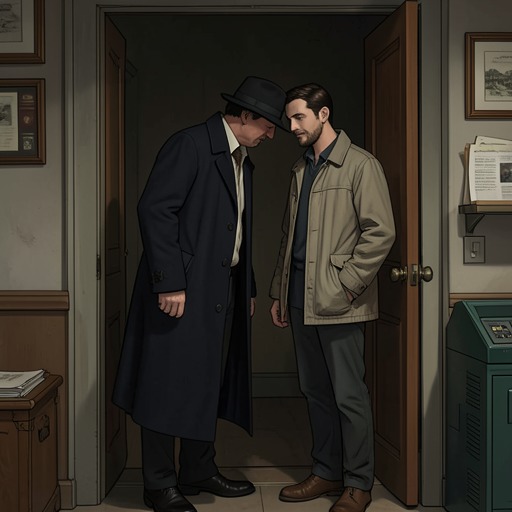
After Emily’s death, Hastings hurries to Leastways Cottage to ask for Poirot’s help. When no one answers, he knocks again impatiently; a window above opens cautiously, and Poirot looks out. Hastings explains the tragedy in a few words, turning the cottage from a private residence into the first place he seeks counsel in the crisis.
That first urgent visit sets a pattern. Hastings later returns with Poirot, and the familiar stairs lead them up to the cottage. The repeated journey gives the house a practical role in the inquiry: it is where Hastings can bring questions and observations, and where Poirot can pursue the logic of the evidence away from the household at Styles Court.
Evidence, Law, and Interpretation
The cottage is associated with the investigation’s effort to separate apparently settled evidence from its actual meaning. On one visit, Hastings and Poirot discuss evidence that seems conclusive. Poirot argues that genuine evidence is often vague and unsatisfactory and must be examined and sifted; in this instance, the case appears cut and dried because the evidence has been cleverly manufactured. The cottage setting places this challenge to premature certainty within the ongoing work of private investigation.
The legal history surrounding Emily’s fortune sharpens the contrast between appearances and operative facts. Her August will had left her entire fortune to John Cavendish, with the distribution understood in light of his responsibility to maintain Styles and Lawrence Cavendish’s expected inheritance under their father’s will. Poirot points out that Emily’s remarriage automatically revoked that earlier document under English law. The cottage is one of the places where the inquiry engages with such distinctions: a will’s apparent terms do not by themselves establish its legal effect or settle who stood to benefit.
Testimony about a later document adds another layer. Servants say Emily called them in and asked them to sign at the bottom of a long paper beneath her own signature, while blotting paper covered the writing above. The evidence establishes that they signed, but not what the document said. In the later courtroom account, the destroyed will is presented as having been made in favour of Alfred Inglethorp; the defence, in turn, stresses that John, who had formerly practised at the Bar, knew the earlier will had been revoked by Emily’s remarriage and promises evidence about who destroyed the new one. Together, these claims show why the legal and material history of the papers matters, and why a signature or a plausible inheritance story cannot be treated as the whole explanation.
Repeated Visits and Poirot’s Absence
When Hastings next seeks Poirot at the cottage, Poirot is not there. An old Belgian who answers the knock believes he has gone to London. Hastings is left uncertain whether Poirot had anticipated John’s arrest or whether his own actions had helped bring it about. The scene gives the cottage a further narrative function: its temporarily closed door registers a break in Hastings’s access to the investigator, while the absence redirects his attention to the consequences of the arrest and to the people at Styles.
Later, after Lawrence hints that he may have found the extra coffee-cup, Hastings decides to put aside his reluctance and seek Poirot at the cottage once more. This time he is received with a smile and invited upstairs. Poirot is seated at the table with his head in his hands, then springs up when Hastings enters. The return to the house renews their working connection at a moment when a small piece of household evidence may matter. Across these visits, Leastways Cottage functions as both a refuge and a recurring investigative station: its familiar stairs lead not to a final answer by themselves, but back into the patient reassessment of clues.